 ultimate-guide
Roof Analysis for Facility Managers: 2026 Guide
Table of Contents
- Why Roof Analysis for Facility Managers Beats Reactive Repairs
- How an Infrared Roof Moisture Survey Finds Hidden Problems
- Your Commercial Roof Maintenance Checklist, Built for Multi-Site Portfolios
- Roof Repair vs Replacement Analysis: What the Numbers Actually Say
- Turning Roof Analysis Data into Capital Plans and ESG Reporting
- OSHA Compliance, Safety, and Documentation for Roof Access
- Choosing a Roof Analysis Partner: What to Ask Before You Sign
- Frequently Asked Questions
Last Updated: September 28, 2026
Why Roof Analysis for Facility Managers Beats Reactive Repairs
Roof analysis for facility managers is the practice of systematically inspecting, documenting, and evaluating a commercial roof system's condition so maintenance and capital decisions are based on evidence rather than emergency calls. At GM Systems Commercial Roofing, we've seen how this shift changes everything: instead of chasing leaks after a storm, facility teams plan repairs on their own schedule and budget cycle.
The difference shows up in the numbers. Deferred maintenance compounds quietly.
The Real Cost of Deferred Maintenance
Deferred maintenance is the gap between what a roof needs now and what a budget actually funds. That gap widens every year it's ignored.
How an Infrared Roof Moisture Survey Finds Hidden Problems
An infrared roof moisture survey is a non-destructive inspection method that uses thermal imaging to locate trapped moisture beneath the roof membrane. Wet insulation retains heat differently than dry insulation, so the camera reveals temperature differences that map directly to saturated areas.
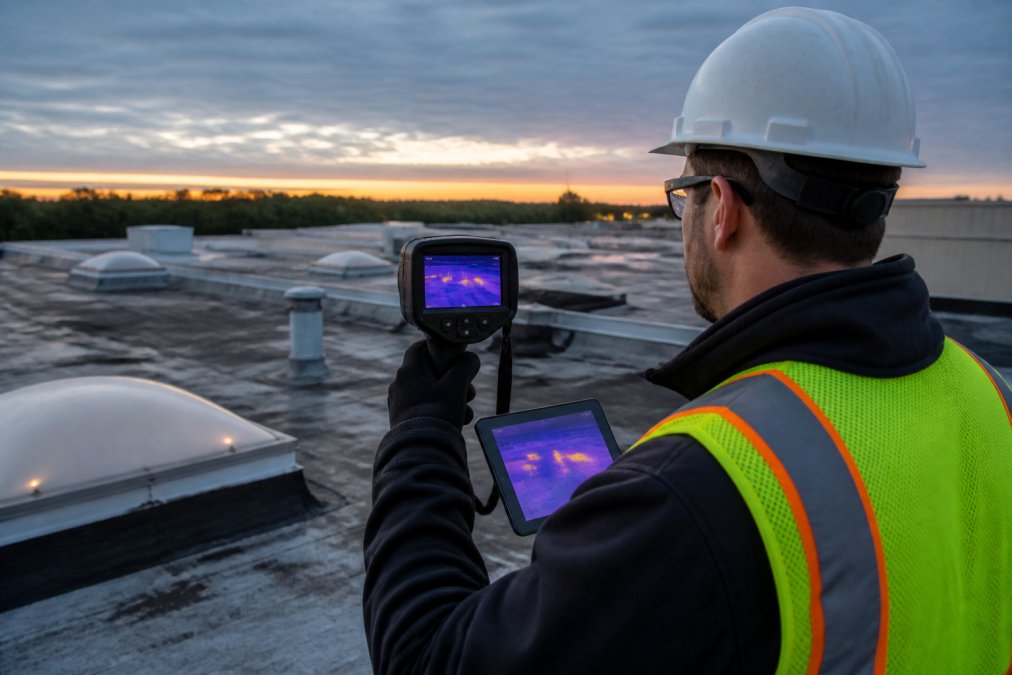
Reading Thermal Imaging Results Without the Guesswork
Thermal imaging results need interpretation, not just capture. A hot spot on camera can mean wet insulation, but it can also mean a reflective patch, a ballasted area, or a change in decking material.
The reliable approach combines three data sets:
- Thermal imaging to flag suspect areas
- Core samples or moisture meters to confirm what the camera suggested
- Visual inspection to connect findings to membrane condition
Your Commercial Roof Maintenance Checklist, Built for Multi-Site Portfolios
A commercial roof maintenance checklist for a multi-site portfolio has to work across buildings of different ages, systems, and exposure. The checklist below is the structure we use to keep findings consistent from site to site.
| Frequency | Task | Owner | Output |
|---|---|---|---|
| Quarterly | Visual walk-through, drain clearing | On-site staff | Photo log |
| Semi-annual | Full inspection, seam and flashing check | Roofing provider | Condition report |
| Annual | Infrared moisture survey | Certified inspector | Moisture map |
| Annual | Budget and capital review | Facility director | Funding request |
| After storms | Damage documentation | On-site staff | Insurance file |
Roof Repair vs Replacement Analysis: What the Numbers Actually Say
Roof repair vs replacement analysis compares the remaining service life of a roof system against the cost and disruption of replacement. The goal isn't to delay replacement forever; it's to replace on your schedule rather than the roof's.
The 25% Rule and Other Decision Triggers
The 25% rule is a common industry guideline: if repair costs approach roughly a quarter of replacement cost, and the roof is already in its final third of service life, replacement usually wins on lifecycle cost.
Other triggers that push toward replacement:
- Widespread moisture saturation confirmed by survey
- Repeated leaks in the same area after multiple repairs
- Insulation that has lost thermal performance
- A roof already at or past its expected service life
- Fastener back-out or deck corrosion found during core sampling
A Simple Formula for Justifying Proactive Spend
Annualized cost = (remaining repair spend + disruption cost + energy penalty) ÷ years of service life remaining
Where the Data Has to Come From
You cannot run this analysis on memory. You need at least three years of comparable condition data, moisture maps, repair invoices, and energy use, tied to the same roof sections. That is the practical reason to standardize inspection outputs early, before the roof reaches the decision point. When the data is already structured, the repair-vs-replacement call becomes a calculation instead of an argument.
Turning Roof Analysis Data into Capital Plans and ESG Reporting
Roof analysis data is capital planning evidence. A condition report with moisture maps, photos, and cost estimates turns a vague request into a defensible line item. But the value only materializes if the data flows into the systems your organization already uses for budgeting, work orders, and reporting.
Splitting Emergency and Planned Capital Expenditure
Most facility budgets lump roof spend into one line, which hides the real story. Split it into two buckets:
- Planned capital, scheduled restoration, membrane replacement, and lifecycle-driven projects funded through the normal capital cycle.
- Emergency spend, storm response, leak calls, and unplanned repairs funded from operating budgets or contingency reserves.
Feeding Roof Data into CMMS and BIM
Integration with CMMS or BIM software is where most programs fall short. When inspection findings live in a PDF on someone's desktop, they can't drive work orders, budget forecasts, or trend analysis.
The practical workflow:
- Standardize the inspection output. Every finding gets a location ID, a condition rating, a photo, and a recommended action with a cost range.
- Map locations to your CMMS asset hierarchy. Each roof section or building becomes an asset record so findings attach to the right place.
- Auto-generate work orders from recommended actions, with priority tied to condition severity.
- Roll findings up to the portfolio level so capital planning sees every roof on one dashboard, not a stack of unrelated reports.
Roof Data and Sustainability Reporting
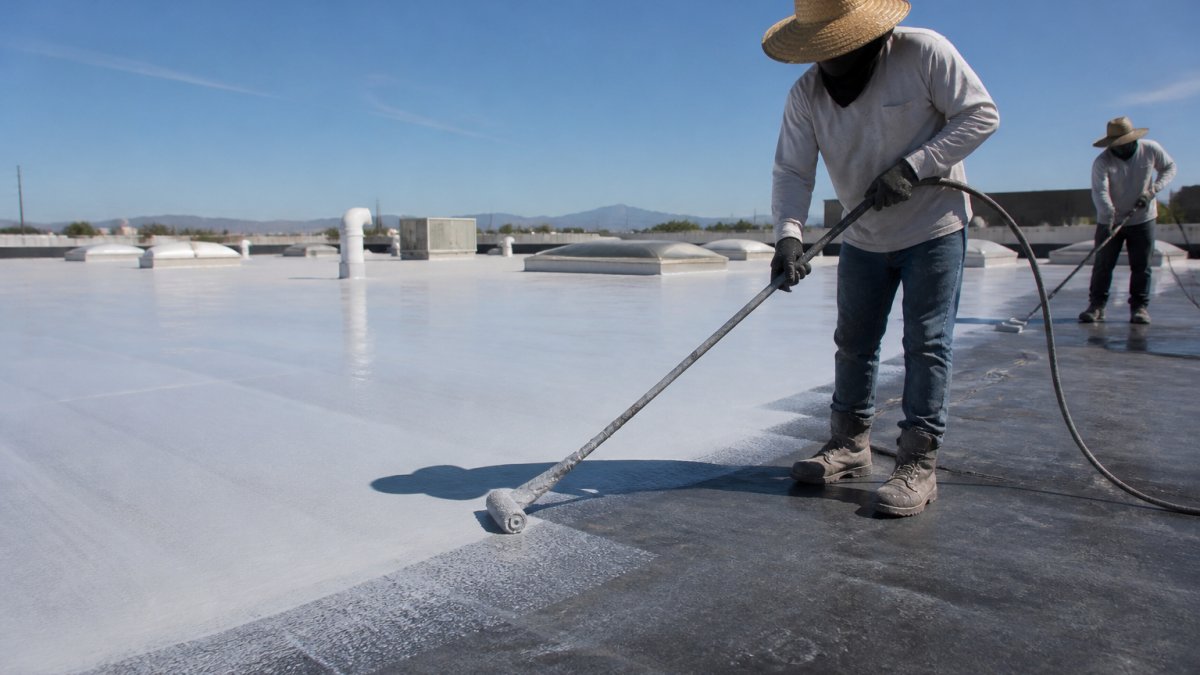
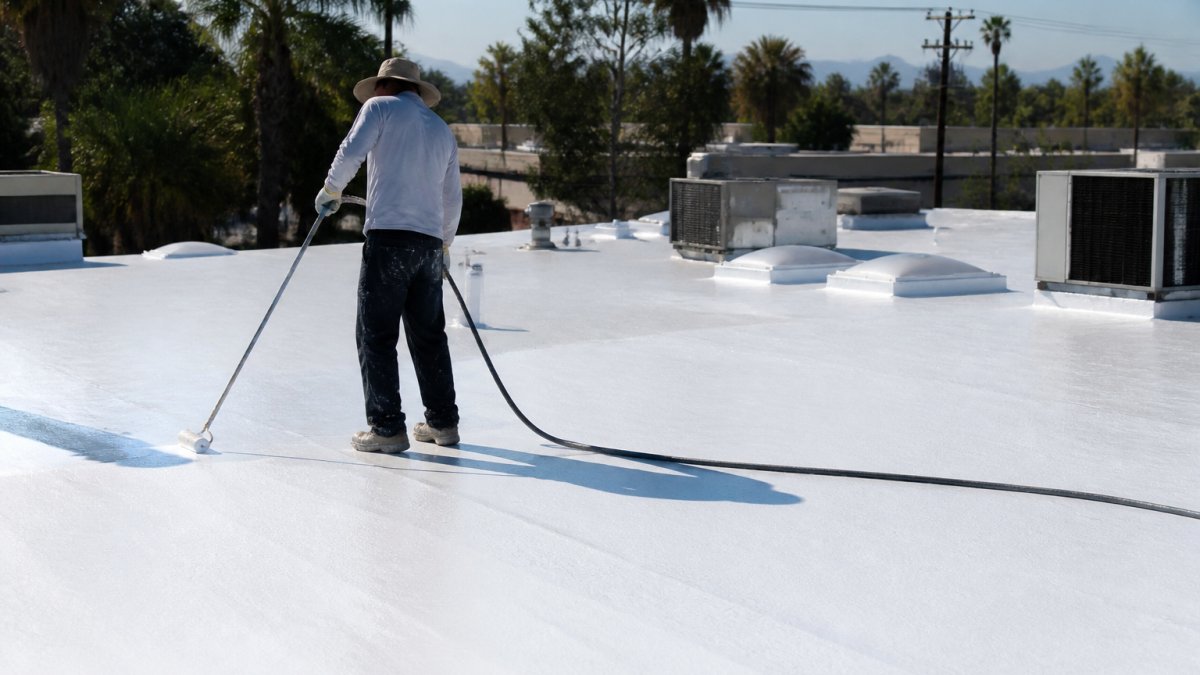
Reflective roof restoration can reduce heat load and lower cooling demand, and documented roof condition supports building performance disclosures. Facility teams increasingly need this data for internal reporting and for stakeholder requests.
OSHA Compliance, Safety, and Documentation for Roof Access
OSHA compliance for roof work starts with fall protection. Roof access, edge protection, and anchorage requirements apply to anyone on the roof, including your own staff doing a walk-through.
Choosing a Roof Analysis Partner: What to Ask Before You Sign
Choosing a roof analysis partner comes down to verification, reporting quality, and portfolio capacity. A provider who only hands you a photo album isn't delivering analysis.
Ask these questions before signing:
- Do you verify thermal findings with moisture meters or core samples?
- What does the written report include, and can I compare it year over year?
- Can you service multiple sites across state lines?
- Do you separate repair recommendations from replacement recommendations?
- How do you handle insurance documentation after storm events?
Frequently Asked Questions
What is the 25% rule for roofing?
The 25% rule is a common industry guideline: if roof repair costs reach about a quarter of what a full replacement would cost, replacement usually makes more financial sense. It is not a hard rule, though. A roof analysis that factors in remaining service life, moisture spread, and warranty terms gives you a clearer answer than the percentage alone.
How often should a facility manager conduct a professional roof analysis?
Most commercial roofs benefit from a professional roof analysis every 12 to 18 months, plus a walkthrough after major storms. Buildings with older membranes, heavy foot traffic from HVAC work, or a history of leaks may need semi-annual reviews. A commercial roof maintenance checklist helps you track what was found and fixed between full analyses.
How does infrared thermography improve roof analysis accuracy?
Infrared thermography detects temperature differences that reveal trapped moisture under the roof membrane, which the eye cannot see. An infrared roof moisture survey can map wet insulation across an entire roof in hours, so you know the true scope of damage before budgeting. This prevents paying for repairs that miss hidden problem areas.
What is the difference between a roof inspection and a roof analysis?
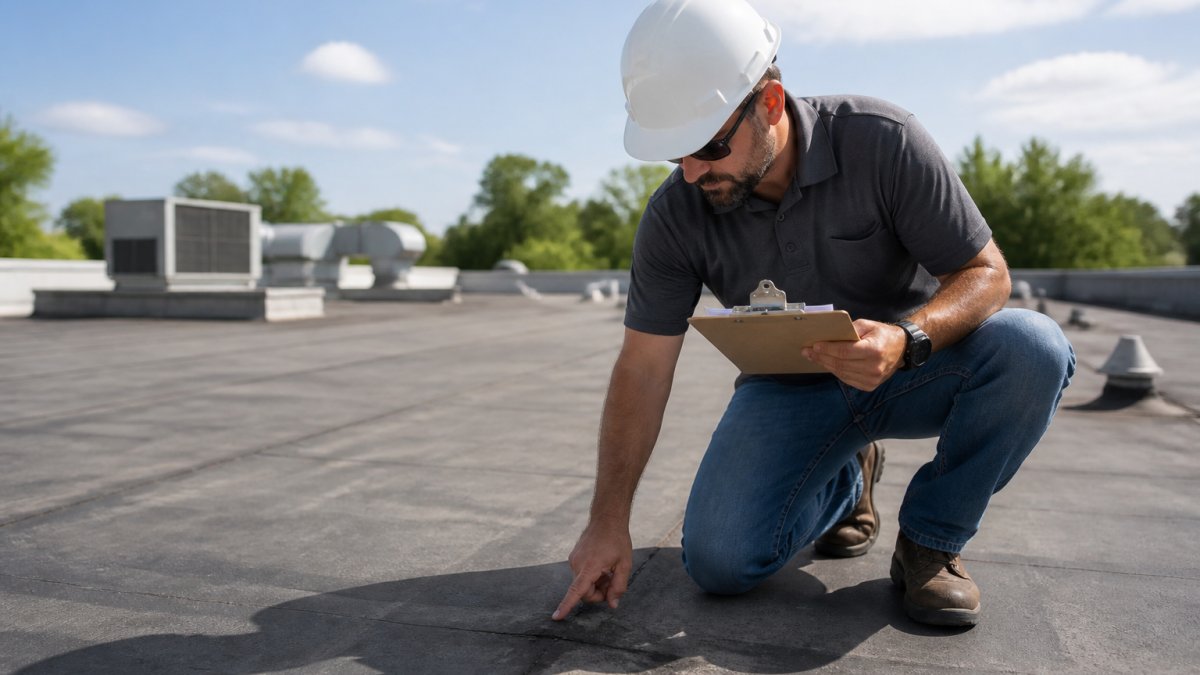
A roof inspection is a visual check for obvious damage like cracks, blisters, or open seams. A roof analysis goes further: it combines inspection findings, moisture surveys, and lifecycle data to estimate remaining service life and recommend repair, restoration, or replacement. For capital planning, a roof analysis gives you numbers you can defend to leadership.
How do you calculate the remaining service life of a commercial roof?
Remaining service life is estimated from the roof's age, membrane type, installation quality, maintenance history, and current condition. An analyst assigns a roof condition index score, then subtracts for moisture intrusion, ponding, and seam failures. The result helps you decide whether to repair now or schedule replacement in your capital budget.
Our roof isn't leaking yet. Do we still need a roof analysis?
Yes, and that is exactly when it pays off. Moisture often travels far from the visible leak point, so by the time water shows up inside, insulation and decking may already be damaged. A proactive roof analysis catches saturated insulation and failing seams early, when repair or reflective restoration costs far less than emergency replacement.
Roof decisions get expensive when they're made in a hurry. The facility managers who control their budgets are the ones who inspect on a schedule, document what they find, and plan replacement years before it's forced on them.
GM Systems Commercial Roofing provides data-backed roof analysis, targeted leak repair, and energy-efficient reflective roof restoration for commercial portfolios. Get a free roof analysis and see exactly where your roofs stand before the next budget cycle.