 how-to
Industrial Roof Waterproofing for Warehouses: 2026 Guide
Last Updated: October 24, 2026
Quick Summary
Industrial roof waterproofing for warehouses is a system matched to the roof, climate, and drainage, not a coating you roll on and forget. Water always finds the weakest detail first, the seam, fastener, flashing collar, or penetration boot, so waterproofing demands attention to those details.
- Seams are the top failure point on metal roofs, and fasteners back out from thermal movement.
- Trace leaks backward from interior stains, then confirm with an infrared scan where insulation may be wet.
- Use the same written inspection checklist twice a year and after any major storm.
- Silicone handles ponding best, acrylic suits metal roofs that drain well, and polyurea cures fast.
- Coating systems typically add 10 to 20 years of service life depending on product and substrate condition.
Table of Contents
- Why Warehouse Roof Waterproofing Fails (and What It Costs)
- Commercial Roof Leak Detection: Finding the Real Entry Point
- Your Warehouse Roof Inspection Checklist
- Industrial Roof Coatings and Waterproofing Systems Compared
- Step-by-Step: Applying a Waterproofing System Safely
- Roof Coating vs. Roof Replacement: The Decision Framework
- Frequently Asked Questions
Why Warehouse Roof Waterproofing Fails (and What It Costs)
Industrial roof waterproofing for warehouses fails for one reason: water always finds the weakest detail first, the seam, fastener, flashing collar, or penetration boot, not the middle of the panel, which is why industrial roof waterproofing demands attention to those details.
At GM Systems Commercial Roofing, we see the same pattern: a roof that looks sound from the parking lot is leaking at three or four small details nobody has inspected in years.
The cost isn't the patch. It's what the water touches on the way down.
- Wet insulation loses its thermal value and stays wet
- Standing water rusts decking and corrodes fasteners from underneath
- Inventory, packaging, and equipment sit under every drip
Waterproofing isn't a coating you roll on and forget, it's a system matched to the roof, climate, and drainage.
The Problem Areas on Every Warehouse Roof
Every warehouse roof has the same weak points.
Seams are the top failure point on metal roofs.
Fasteners back out from thermal movement.
Flashing at walls, curbs, and edges takes the most wind and sun.
Penetrations for vents, pipes, and rooftop units depend on a boot or collar.
Drains and scuppers clog with debris.
For the repair side of these details, see our commercial metal roof repair service.
Commercial Roof Leak Detection: Finding the Real Entry Point
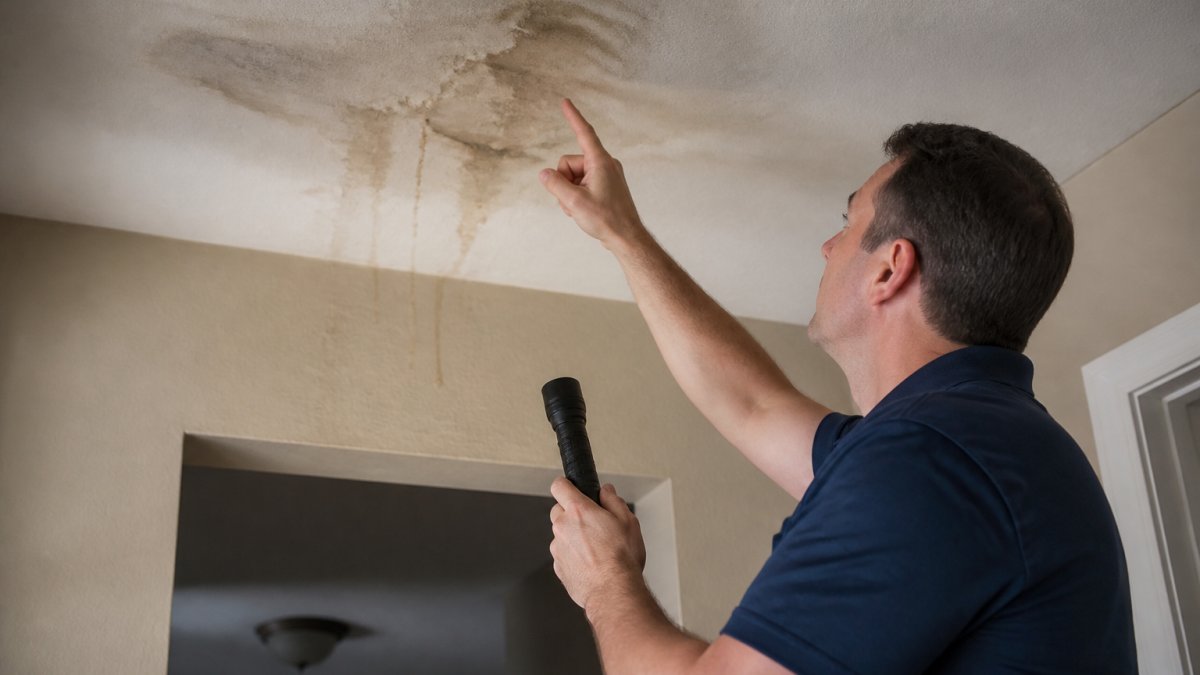
Commercial roof leak detection traces water backward from where it shows up inside to where it enters the roof assembly.
Water travels along decking, insulation, and purlins, entering 30 feet away and showing up at a column.
How we trace it:
- Map every interior stain, drip, and damp spot first
- Check the roof above and uphill of each one
- Look for ponding, debris dams, and low spots that hold water
The last step matters. If you want to know what happens after a leak is confirmed, read our guide to commercial roof leak repair.
Your Warehouse Roof Inspection Checklist
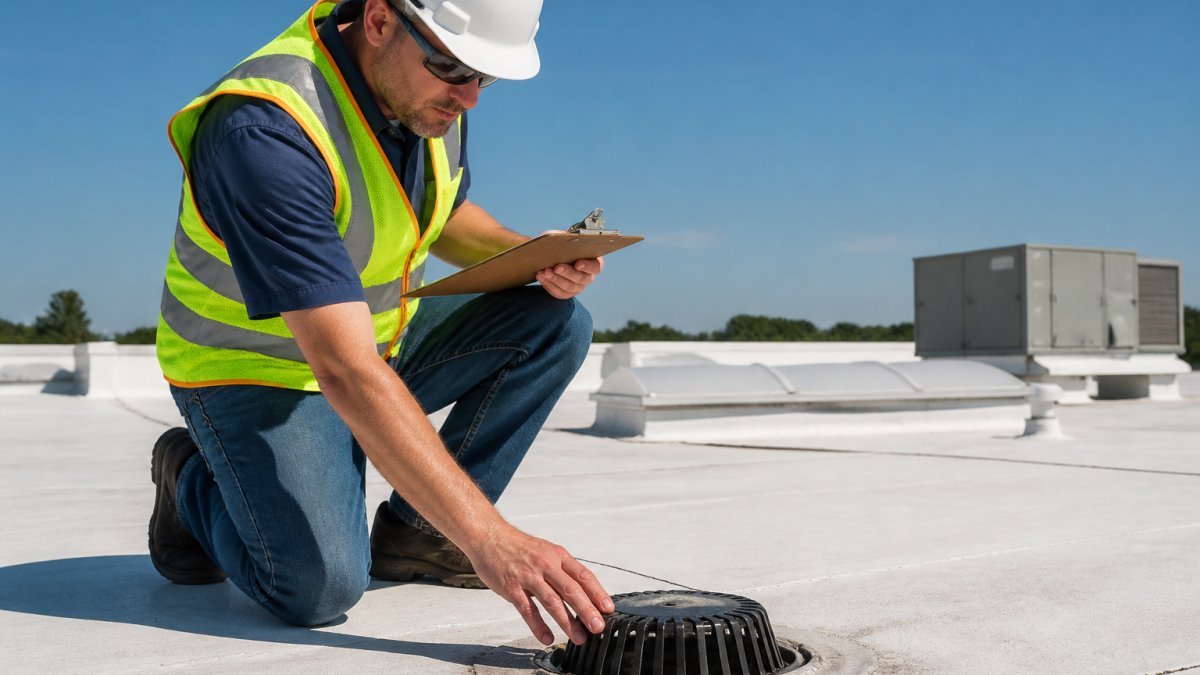
A warehouse roof inspection checklist is a written, repeatable list of details checked every time, so nothing gets skipped. Use the same list twice a year and after any major storm.
- Walk the perimeter and check edge metal and flashing
- Inspect every seam for cracks, lifting, or exposed fasteners
- Check fastener rows for backed-out screws and rust
The written report is the part most owners skip. It's also the part that turns a roof from a guessing game into a maintenance plan.
Industrial Roof Coatings and Waterproofing Systems Compared
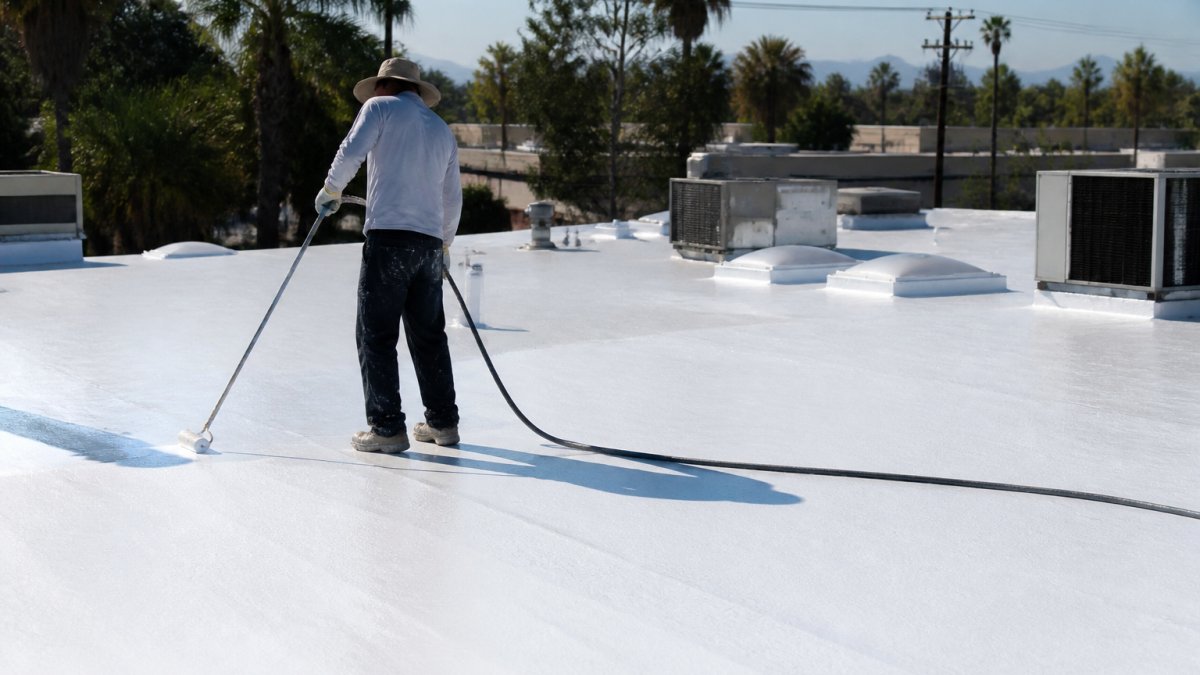
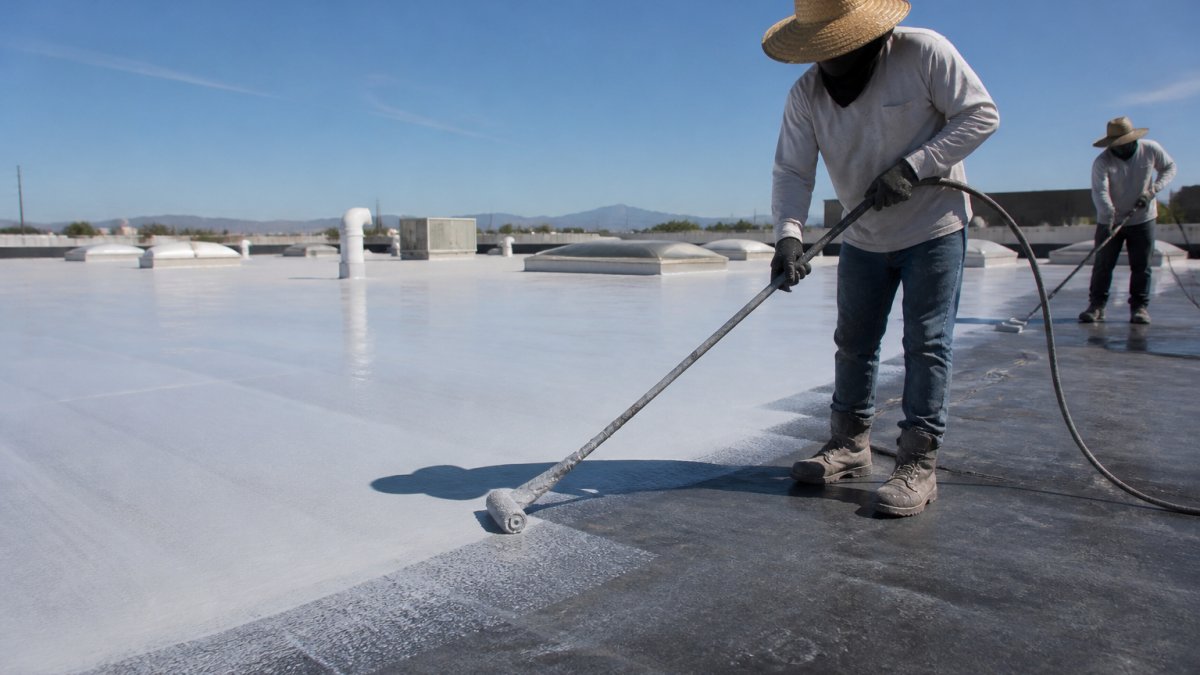
Industrial roof coatings are liquid-applied products that cure into a seamless, waterproof membrane over an existing roof. Their chemistry decides where each belongs.
| System | Best For | Watch Out For |
|---|---|---|
| Silicone coating | Ponding water, UV exposure | Weak adhesion over dirty or wet surfaces |
| Acrylic (water-based) coating | Metal roofs, budget projects | Poor performance in standing water |
| Polyurea coating | Fast cure, high traffic areas | Needs skilled application, sets quickly |
| Bituminous membrane | Concrete and low-slope decks | Heavy, seams remain a weak point |
| Elastomeric coating | General weather resistance | Stretches but can thin at details |
Silicone handles ponding best; acrylic suits metal roofs that drain well; polyurea cures fast and takes foot traffic; bitumen membranes fit concrete decks.
The system is only as good as the prep under it. Surface preparation, roof cleaning, and crack and seam repair come before any product goes down.
Matching the System to Metal vs. Concrete Roofs
Metal and concrete fail differently, so they need different systems.
Metal roofs move with temperature: seams open, fasteners back out, and panels expand and contract daily. Our commercial metal roof restoration service covers the full repair, prep, and coating sequence.
Concrete roofs crack and hold moisture. The deck is stable but porous. Crack repair and a membrane or coating that bridges cracks matter more than flex.
The mistake we see most: putting a metal-roof product on a concrete deck, or the reverse. It fails, and it fails fast.
Step-by-Step: Applying a Waterproofing System Safely
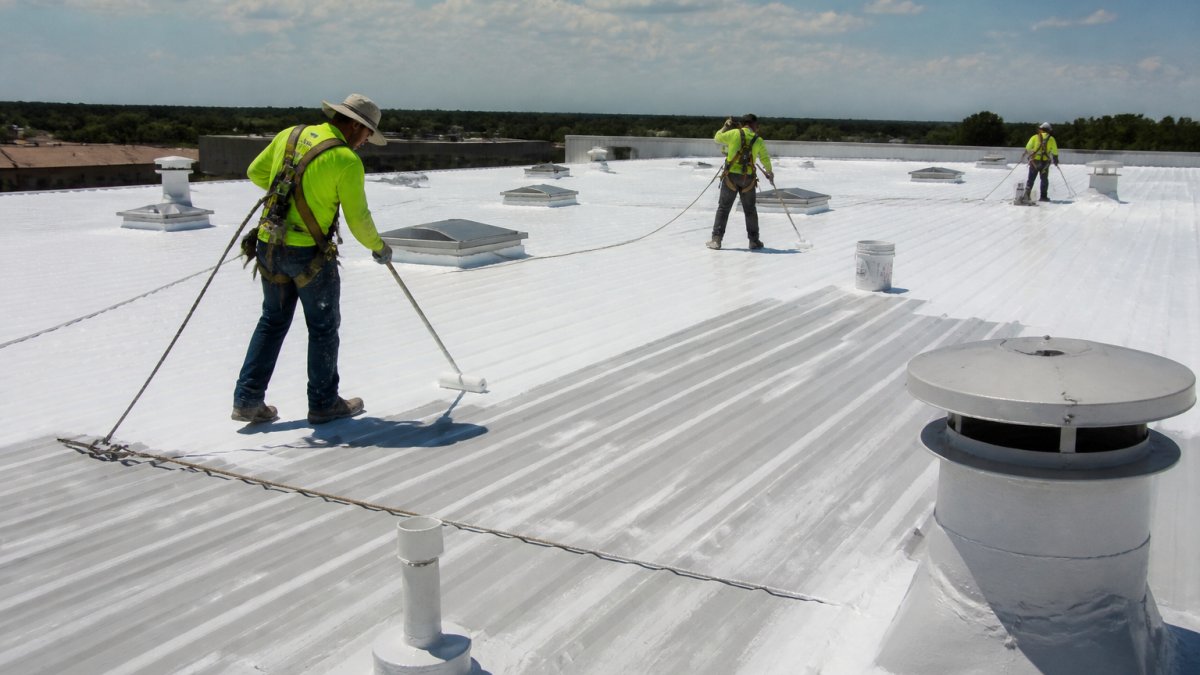
Application is where good systems fail. A coating applied over a damp deck, at the wrong thickness, or without detailing will blister, peel, or crack within a season. The sequence below reflects what experienced crews do on an occupied warehouse roof.
Pre-Application: Weather, Substrate, and Safety Checks
Before any material goes up, three things must be confirmed:
- Weather window. Most liquid-applied systems require substrate and ambient temperatures above 40°F and rising, with no rain forecast for the full cure window. Silicone and acrylic typically need 24 to 48 hours of dry weather; polyurea cures faster but still demands a dry substrate. Check the product data sheet for specific limits.
- Substrate moisture. A dry surface is not a dry roof assembly. Trapped moisture in insulation or decking migrates upward and blisters the membrane. Use a moisture meter on the deck and, where insulation is present, an infrared scan to map wet areas. Wet insulation must be removed and replaced before coating.
- Safety setup. Fall protection is mandatory. Plan anchor points, guardrails, and skylight covers before the crew accesses the roof. Review the OSHA fall protection standards for guardrail height, personal fall arrest systems, and training requirements. On an occupied warehouse, also coordinate with facility management on staging areas, material hoisting, and emergency egress.
Surface Preparation and Repair
- Cleaning. Remove dirt, debris, loose coating, and biological growth. Power washing or air blowing is common, but the surface must be fully dry before primer or coating. Coatings do not bond to dust or oil.
- Seam and fastener repair. On metal roofs, re-seal every open seam, replace backed-out fasteners, and treat rusted fasteners with a rust converter before coating. On concrete, rout and fill cracks wider than hairline with appropriate sealant.
- Penetration detailing. Boots, pipe collars, and curb flashings get reinforced with fabric or extra coating before the field coat. These details take the most movement and fail first if not reinforced.
- Primer. Apply the manufacturer-specified primer, some systems require it over metal, others over concrete. Skipping primer or using the wrong one is a common cause of adhesion failure.
Application and Detailing
- Field coating. Apply at the manufacturer's specified wet-film thickness, typically in two coats rather than one heavy pass. Use a wet-film gauge during application to confirm thickness. Spray, roll, or both, depending on product and access.
- Detail reinforcement. While the field coat is still wet or between coats, embed reinforcing fabric at seams, edges, and penetrations. This is what makes the membrane seamless in practice, not just in marketing.
- Cure and inspection. Allow full cure per the data sheet, then inspect for pinholes, thin spots, and uncured areas. A dry-film thickness gauge gives a measurable check; most manufacturers specify a minimum dry-film thickness across the field and at details.
Quality Control and Acceptance Criteria
A completed coating job should be documented, not just eyeballed. Ask for:
- Adhesion check. A pull-off adhesion test (per ASTM D4541) on a sample area confirms the coating bonded to the substrate. This is especially important over existing coatings or questionable surfaces.
- Thickness readings. Dry-film thickness measurements at multiple points across the roof, compared to the manufacturer's minimum.
- Detail inspection. Written confirmation that every seam, fastener, and penetration was treated and reinforced.
When you're ready to move from planning to a contractor, you can request a free roof analysis for your building.
Roof Coating vs. Roof Replacement: The Decision Framework
The coating-versus-replacement decision is not about which option is cheaper today. It is about which gives the longest service life for the money without disrupting warehouse operations. "Coating if the roof is sound, replacement if it is not" is true but not useful when you are staring at a 20-year-old metal roof with three active leaks and a budget cycle to hit.
The Real Cost Drivers
Coating and replacement carry different cost structures, and understanding them prevents apples-to-oranges bids.
- Coating cost drivers: square footage, roof accessibility, number of penetrations and seams, extent of substrate repair, coating system chosen (silicone, acrylic, polyurea), and whether wet insulation must be replaced. A roof with dozens of failed details costs more to coat than a clean field.
- Replacement cost drivers: tear-off and disposal, deck repair or replacement, new insulation (R-value requirements vary by code and climate), new membrane or panel system, flashing and edge metal, and crane or hoist needs. Replacement also carries downtime and potential interior protection costs.
- Hidden costs: both options can involve interior protection for inventory and equipment, temporary roof access, and disposal fees. Coating avoids tear-off disposal but may require more surface prep labor.
Lifecycle Comparison
Rather than quoting a single price, compare the options on expected service life and maintenance burden:
- Coating systems typically add 10 to 20 years of service life depending on the product and substrate condition. They require periodic recoating or touch-up, especially at details, and performance depends heavily on prep quality.
- Replacement resets the clock with a new roof expected to last 20 to 30 years or more, depending on the system. It also allows insulation upgrades that can reduce energy costs, but the upfront cost and downtime are higher.
- Repair-only is the lowest-cost option for isolated leaks but does not extend overall roof life and may become a recurring expense if the roof is near the end of its service life.
The right comparison is cost per year of service life, not just first cost. For a closer look at when restoration pays off, see when commercial roof restoration pays off. A coating that costs less but lasts half as long may not be the better value. A replacement that lasts decades but shuts down operations for weeks may not fit the budget cycle.
Operational and Scheduling Considerations
Warehouse operations rarely stop for roof work. Factor these in:
- Downtime: coating can often be phased around operations, while replacement may require sections of the building to be closed or inventory relocated.
- Occupied-facility protection: both options need protection for inventory, equipment, and workers below. Coating generates less debris but still involves equipment and material staging.
- Weather sensitivity: coating requires a dry window; replacement is also weather-dependent but may be less sensitive to short rain events once the deck is exposed.
When Replacement Is the Better Call
Coating is not always the answer. Replacement is preferable when:
- The deck is corroded or structurally compromised
- Insulation is saturated and cannot be dried or replaced economically without tear-off
- Leaks are widespread rather than isolated to details
When you are unsure, a condition assessment with moisture mapping and a written report gives you the basis to compare bids fairly. You can request a free roof analysis to start that process.
Frequently Asked Questions
Can a roof coating stop leaks in a warehouse?
Yes, when the leak source is repaired first. A liquid-applied industrial roof waterproofing system forms a seamless barrier over the deck, seams, and fasteners, so it seals the paths water uses to get in. Coatings work best on roofs with sound substrate, minor ponding, and limited saturation. If the insulation is soaked or the deck is corroded through, coating alone will trap moisture and fail. The reliable sequence is diagnose the leak, repair seams and penetrations, then coat.
How do you find the source of a warehouse roof leak?
Commercial roof leak detection starts with the interior: trace staining, drip paths, and wet insulation back to the roof area above, since water often travels far from the actual hole. On the roof, inspect seams, fasteners, penetrations, drains, and flashing first. A warehouse roof inspection checklist plus moisture meters and infrared scanning confirm saturated areas before anyone commits to a repair scope. Documenting each finding keeps the fix tied to evidence instead of guesswork.
When should a warehouse roof be repaired instead of replaced?
Repair or restoration makes sense when the deck and insulation are largely dry, the roof is under roughly 15 to 20 years old, and damage is concentrated at seams, penetrations, or flashing. Replacement wins when saturation covers large areas, the deck is corroded, or repairs have already been repeated in the same spots. A roof coating vs roof replacement decision should rest on moisture readings and a written condition assessment, not on age alone.
How often should an industrial warehouse roof be inspected?
Twice a year is the standard baseline: once in spring and once in fall, before and after the seasons that stress a roof most. Add an inspection after any major storm and whenever interior staining appears. Each visit should follow a warehouse roof inspection checklist covering seams, fasteners, drains, penetrations, flashing, and ponding. Regular inspections catch small seam failures before water reaches inventory, which is far cheaper than emergency repairs.