 how-to
Preventative Roof Maintenance for Churches: A Step-by-Step Guide
Last Updated: October 23, 2026
Quick Summary
Preventative roof maintenance for churches stops water infiltration before it damages your building, protects structural integrity, and extends your roof's lifespan by years. Inspect your roof twice yearly in spring and fall, clean gutters regularly, monitor flashing and sealants, and address small problems immediately to avoid costly emergency repairs.
- Inspect church roofs at least twice yearly, plus after severe weather events like heavy snow, high winds, or hail.
- Failed flashing causes 90% of roof leaks; inspect monthly and reseal every 3-5 years before failure occurs.
- Clogged gutters are the leading cause of water damage; clean at least twice yearly and ensure downspouts direct water 6 feet from the building.
- A single undetected leak can cost tens of thousands in structural damage, making preventative work far cheaper than corrective repairs.
- Never allow untrained volunteers on roofs; hire licensed professionals for work above ground level to avoid liability and injury.
Table of Contents
- Why Preventative Roof Maintenance Matters for Churches
- How Often Should a Church Roof Be Inspected
- Church Roof Maintenance Checklist: Essential Steps
- Church Roof Leak Prevention Strategies
- Budgeting for Church Roof Maintenance Costs
- Preventative vs. Corrective Maintenance: Understanding the Difference
- Safety Protocols and Insurance Documentation
- Conclusion
- Frequently Asked Questions
Why Preventative Roof Maintenance Matters for Churches
Preventative roof maintenance for churches is the difference between a building that lasts decades and one that fails prematurely.
At GM Systems Commercial Roofing, we help churches across the Midwest. Those that invest in preventative maintenance spend far less over time, because water damage compounds: a small sealant failure today becomes a major flashing problem next year, and a roof replacement in five years if left unchecked.
How Often Should a Church Roof Be Inspected
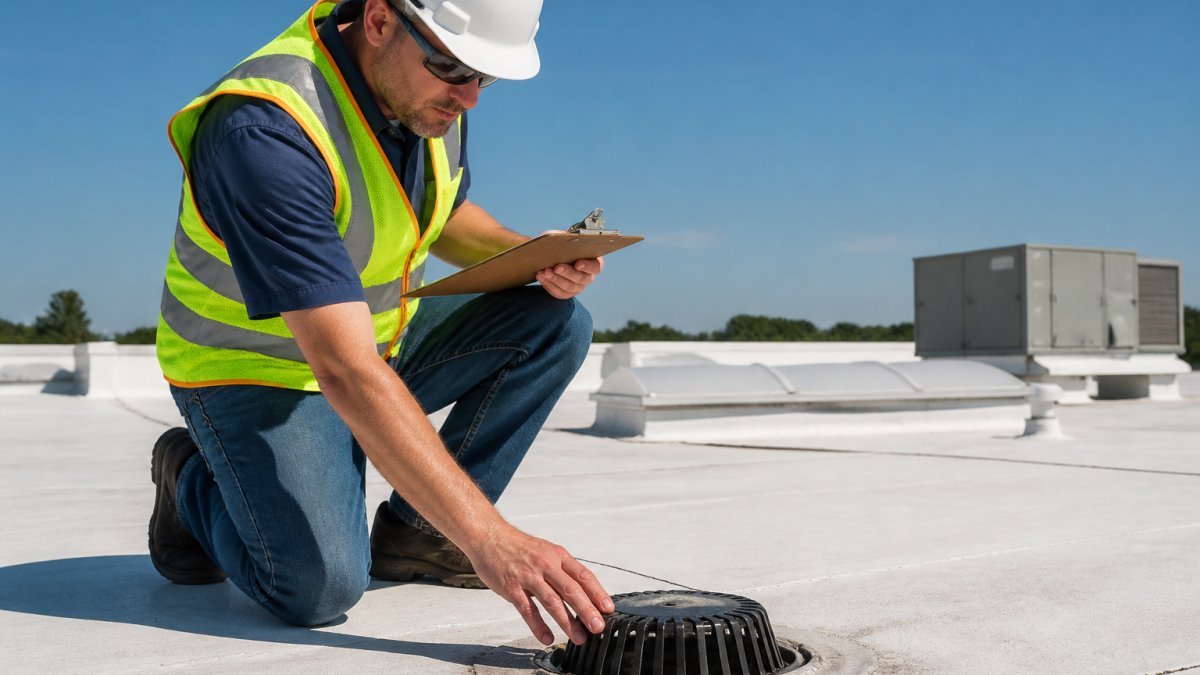
Your church roof should be inspected at least twice per year, once in spring and once in fall.
A professional roof inspection identifies issues before they become emergencies. Between inspections, conduct monthly ground-level visual checks for missing shingles, debris, or interior ceiling water damage.
The frequency depends on your roof's age and condition:
- New roofs (0-5 years): Twice yearly is sufficient
- Mid-life roofs (5-15 years): Twice yearly plus post-storm checks
- Aging roofs (15+ years): Quarterly inspections recommended
Regular inspections create a maintenance schedule that prevents surprises. You'll know exactly when repairs are needed instead of discovering problems during a service.
Church Roof Maintenance Checklist: Essential Steps
Preventative roof maintenance for churches follows a structured process targeting the most common failure points: damaged shingles, blocked gutters, failed sealants, and deteriorating flashing.
Visual Inspection and Damage Assessment
Start with a ground-level visual inspection for these warning signs:
- Missing, cracked, or curling shingles
- Visible gaps or separation in the roof membrane
- Debris accumulation on the roof surface
Inside, check attic spaces and ceilings for water stains, mold, or soft spots indicating active or recent leaks. Document everything with photos for your maintenance plan and insurance claims.
Gutter and Downspout Cleaning
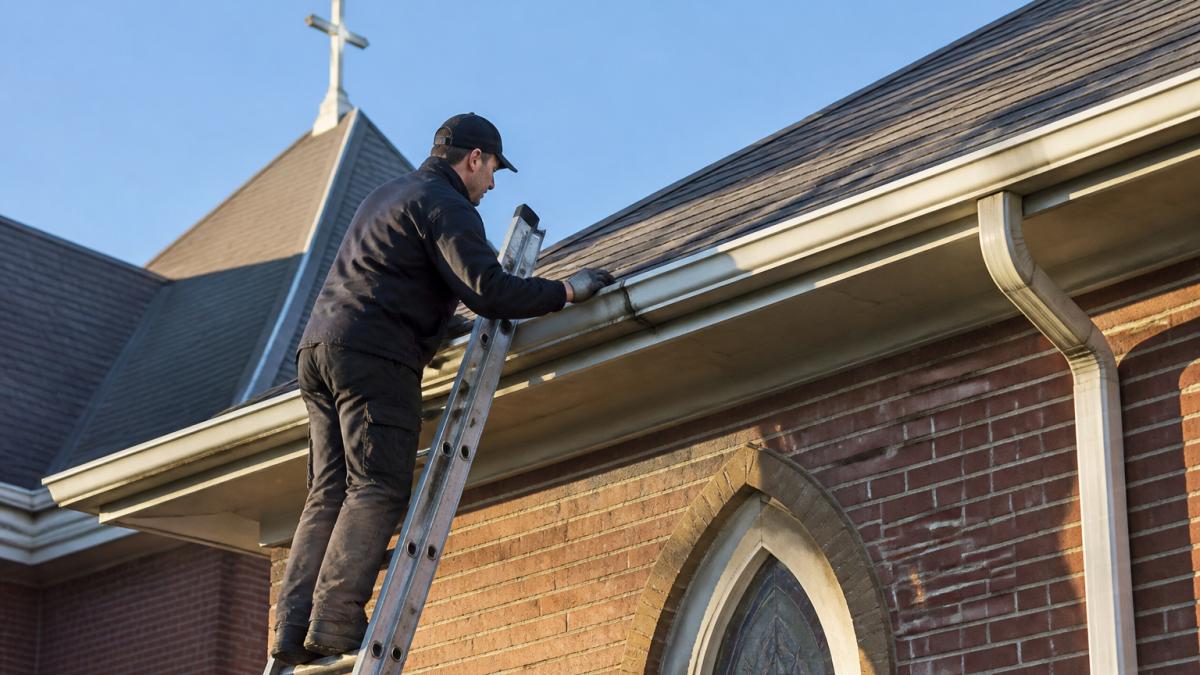
Clogged gutters are the leading cause of water damage in churches: debris blocks drainage, forcing water to pool and accelerating membrane deterioration while creating entry points for leaks.
Clean gutters at least twice yearly:
- Remove leaves, twigs, and debris by hand or with a gutter scoop
- Flush gutters with a garden hose to clear remaining sediment
- Check downspouts for blockages and clear them
If large trees are nearby, clean four times yearly, since tree debris accumulates faster and causes more damage.
Flashing and Sealant Evaluation
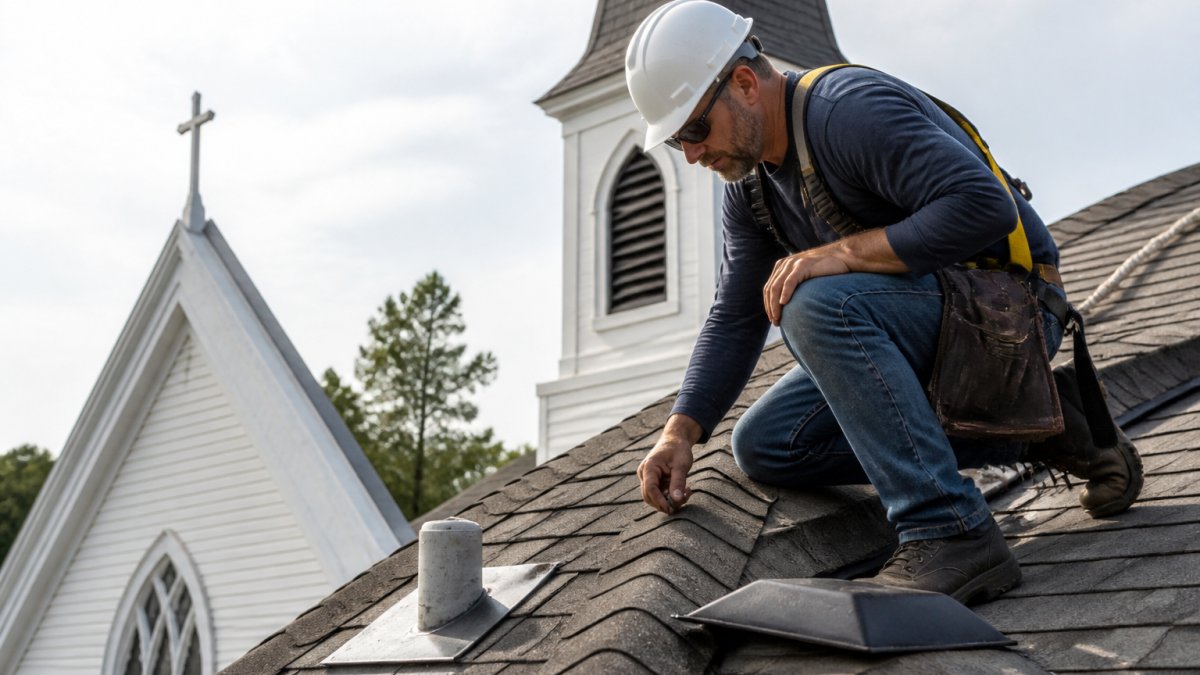
Flashing is where the roof meets vertical surfaces, chimneys, vents, skylights, and walls. Failed flashing causes 90% of roof leaks, and sealant failure creates gaps that allow water infiltration.
Inspect flashing monthly during your visual checks:
- Look for gaps between flashing and the roof surface
- Check for rust, corrosion, or deterioration of metal flashing
- Examine sealant for cracks, peeling, or missing sections
When you find failed sealant, don't wait: water infiltration accelerates once the seal breaks. Resealing takes hours and costs a fraction of water damage repairs.
Church Roof Leak Prevention Strategies
Preventing leaks is exponentially cheaper than fixing water damage, and the most effective strategy is addressing problems before they become leaks.
Your prevention plan should include:
- Maintain roof drainage: Clean gutters and downspouts regularly to prevent standing water
- Trim overhanging branches: Falling limbs damage shingles and gutters; branches rubbing the roof accelerate deterioration
- Monitor sealants: Reapply sealant every 3-5 years before failure occurs
Preventative maintenance stops water infiltration at its source. Once water enters the building envelope, damage multiplies: wet insulation loses effectiveness, wood framing rots, mold develops, and these secondary costs dwarf the original repair.
Budgeting for Church Roof Maintenance Costs
Effective budgeting means understanding preventative, corrective, and emergency maintenance, then translating that into how a church approves and tracks money.
Preventative maintenance includes routine inspections, cleaning, sealant reapplication, and minor repairs; these costs are predictable and belong in your annual operating budget. Corrective maintenance addresses damage found during inspections, such as replacing shingles or repairing flashing; it costs more than preventative work but far less than emergency repairs, and is best funded from a designated building reserve.
How Church Finance Structures Affect Roof Budgeting
Most churches don't budget like commercial property owners. Three structural realities shape your planning:
- Board or trustee approval cycles. Major roof spending usually requires a vote at a monthly or quarterly board meeting. A preventative plan that spreads work across the year avoids the scramble of seeking emergency approval mid-service-season.
- Restricted versus unrestricted funds. Donations given for a specific building project are often restricted and cannot be used for routine maintenance. Know which bucket your roof work falls into before you present a budget.
- Capital reserve versus operating budget. Routine inspections and gutter cleaning belong in the operating budget. Roof replacement and large corrective projects belong in a capital reserve that is funded annually, even in years when the roof looks fine.
A practical rule many facility committees use is to allocate a percentage of the building's replacement value annually for roof maintenance and reserve funding. This figure looks high until you compare it to roof replacement or water damage remediation.
Building a Multi-Year Roof Budget
A single annual number is a guess, not a budget. Build a three-to-five-year projection instead:
- Year one: Professional inspections twice, gutter cleaning twice, and a sealant and flashing audit. Fund any corrective items found in the audit from the reserve.
- Years two and three: Repeat inspections and cleaning, and schedule sealant reapplication if the audit showed aging seals. Begin setting aside reserve funds for the eventual replacement.
- Years four and five: Increase the reserve contribution as the roof ages, and commission a replacement feasibility study if the roof is past 15 years old.
Present this projection to your board as one document with inspection findings attached. Boards approve plans, not line items, and a multi-year view demonstrates stewardship rather than a surprise request.
The Cost of Deferral
The key is consistency. Deferring maintenance doesn't save money; it moves the cost to a future budget year at a higher amount.
Preventative vs. Corrective Maintenance: Understanding the Difference
Preventative maintenance stops problems before they develop. Examples include cleaning gutters, resealing flashing, trimming branches, and removing debris.
Corrective maintenance fixes problems that have already developed. Examples include replacing damaged shingles, repairing leaks, or addressing water damage.
Emergency maintenance happens when damage threatens safety or causes active interior damage.
Preventative roof maintenance for churches breaks this cycle. It's the only strategy that controls costs and protects your asset long-term.
Safety Protocols and Insurance Documentation
Roof maintenance involves working at height, creating serious safety and liability risks amplified in a church setting because much of the labor is volunteer. Here are the protocols volunteers and staff must follow and the documentation that protects the church.
Volunteer Safety: The Liability Most Churches Overlook
Never allow untrained personnel on the roof. Falls are the leading cause of serious injuries in building maintenance, and a volunteer injury can expose the congregation to medical costs, workers' compensation questions, and liability claims. Before any volunteer touches a ladder, confirm three things:
- Insurance coverage. Verify with your insurer whether volunteers are covered for property maintenance activities and under what conditions. Many general liability policies exclude roofing work above a certain height.
- Written permission. Require board or trustee approval for any volunteer maintenance activity that involves height, and keep the approval on file.
- Training and supervision. Assign a trained point person to supervise every volunteer work session, and stop work immediately if conditions are unsafe.
For ground-level tasks like gutter cleaning from a ladder, enforce these rules:
- Use a properly secured ladder rated for the worker's weight plus 250 pounds.
- Maintain three points of contact while climbing.
- Never lean beyond the ladder's side rails.
For anything beyond ground-level visual checks and ladder work, hire a licensed and insured professional. The cost of a professional repair is less than the liability risk of volunteer work at height.
Documentation That Supports Insurance Claims
Insurance companies require proof that the building is being maintained responsibly. A maintenance log is evidence, not paperwork for its own sake. Keep records of:
- Inspection dates and findings, with photographs
- Repairs completed, dates, and contractor invoices
- Photos of damage before and after repairs
This documentation protects your church three ways: it demonstrates due diligence to insurers when a claim is disputed, supports claims by showing the roof's known condition before storm or water damage, and informs future maintenance decisions and board presentations.
A Simple Record-Keeping System
You don't need software. A three-ring binder with tabbed sections for inspections, repairs, contractor documents, and board approvals suffices for most congregations. Store a digital backup of every photograph and invoice, and review the log at each board meeting.
Conclusion
Preventative roof maintenance for churches is the most cost-effective way to protect your building and extend your roof's lifespan.
GM Systems Commercial Roofing helps churches across the Midwest develop comprehensive maintenance plans that extend the functional life of their roofs while controlling long-term costs.
Get a free roof analysis from GM Systems Commercial Roofing and discover exactly what your church roof needs to stay protected for decades to come.
| Maintenance Type | Frequency | Cost Range | Impact |
|---|---|---|---|
| Visual inspection | 2x yearly | $300-$600 | Catches problems early |
| Gutter cleaning | 2-4x yearly | $200-$400 | Prevents water pooling |
| Sealant reapplication | Every 3-5 years | $1,000-$3,000 | Stops water infiltration |
| Flashing repair | As needed | $500-$2,000 | Prevents 90% of leaks |
| Emergency repair | Unplanned | $5,000-$50,000 | Reactive and expensive |
Frequently Asked Questions
How often should a church roof be inspected?
Most churches should schedule roof inspections twice yearly, once in spring and once in fall, to catch seasonal damage before it worsens. After severe weather events (heavy snow, hail, high winds), inspect immediately. If your roof is over 15 years old, consider quarterly inspections. Regular inspections identify small problems like sealant failure or flashing issues before they become costly water infiltration damage.
What should a church roof maintenance checklist include?
A comprehensive checklist covers visual shingle inspection for cracks or missing pieces, gutter and downspout cleaning, flashing condition around vents and chimneys, sealant integrity, roof membrane condition, debris removal, and drainage system function. Document all findings with photos and notes. Include checks for algae growth, ponding water, and signs of structural stress. This documentation supports insurance claims and guides long-term budgeting decisions.
What is the realistic lifespan of a church roof with preventative maintenance?
A well-maintained asphalt shingle roof typically lasts 20-25 years; with energy-efficient reflective coatings and preventative maintenance, you may extend this. Metal roofs last 40-70 years with proper care. Preventative maintenance, regular inspections, timely repairs, and sealant upkeep, directly extends roof lifespan by preventing water infiltration and structural damage that accelerate deterioration.
Why is preventative roof maintenance better than waiting for leaks?
Preventative maintenance stops problems before they cause water infiltration, which damages interior structures, insulation, and building systems. A single undetected leak can cost a substantial amount in repairs. Preventative inspections catch sealant failure, flashing issues, and shingle damage early, when repairs are less expensive. This approach reduces emergency repair costs, protects your building envelope, and extends overall roof lifespan significantly.